

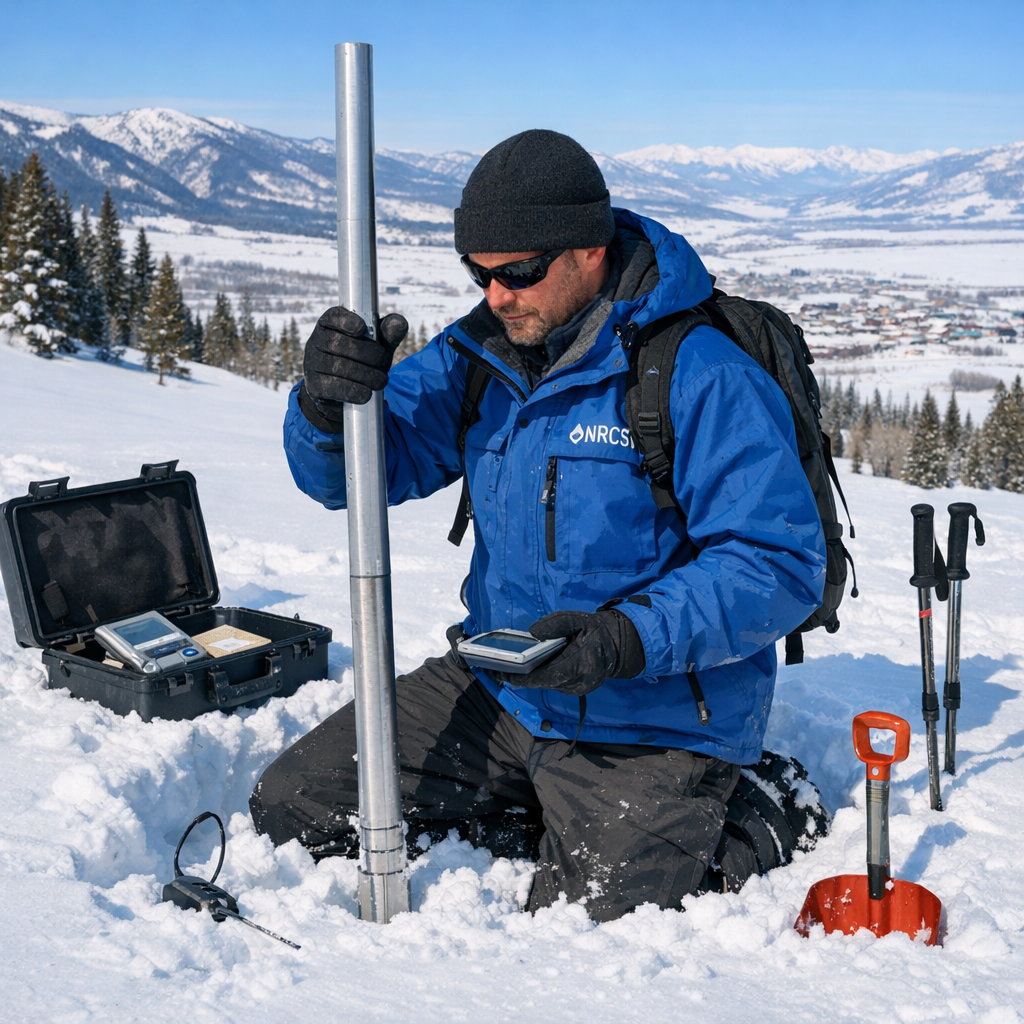
Hydrologist Maureen Gutsch recently conducted field assessments near Kremmling, Colorado, revealing that the state’s mountain snowpack has reached its lowest levels since record-keeping began in 1941. This year’s snow accumulations peaked a month earlier than usual and contained just half the average moisture content.
As a warm winter with poor skiing conditions transitions into early springtime record heat, snow is vanishing from all but the highest elevations in the West. This trend signals potential water shortages that could exacerbate the ongoing significant drought affecting the region.
Gutsch, who is with the U.S. Department of Agriculture’s Natural Resources Conservation Service, expressed concern over the findings. “We love being out here. We love being in the snow, taking these measurements. This year, it’s kind of hard to enjoy it because it’s slightly depressing with the conditions that we’ve seen,” she said.
The implications of this record-low snowpack are far-reaching. Cities in the region are imposing water-use restrictions, and ranchers are facing challenges in feeding and watering their cattle. Additionally, the threat of devastating wildfires looms large as dry conditions persist.
In response to the situation, Denver Water has approved limits to lawn watering and other restrictions, aiming for a 20% reduction in water use. Water officials have urged residents to minimize watering, noting that lawns in the Front Range region are just beginning to green up and don’t require frequent watering until at least mid-May.
“We’re 7 to 8 feet of snow short of where we need to be,” said Nathan Elder, water supply manager for Denver Water. “It would take a tremendous amount of snow to recover at this point, so it’s time to turn our attention to preserving what we have.”
As the West grapples with these challenges, the importance of water conservation and proactive measures becomes increasingly evident. The record-low snowpack serves as a stark reminder of the delicate balance between natural resources and human needs in the face of changing climate patterns.