

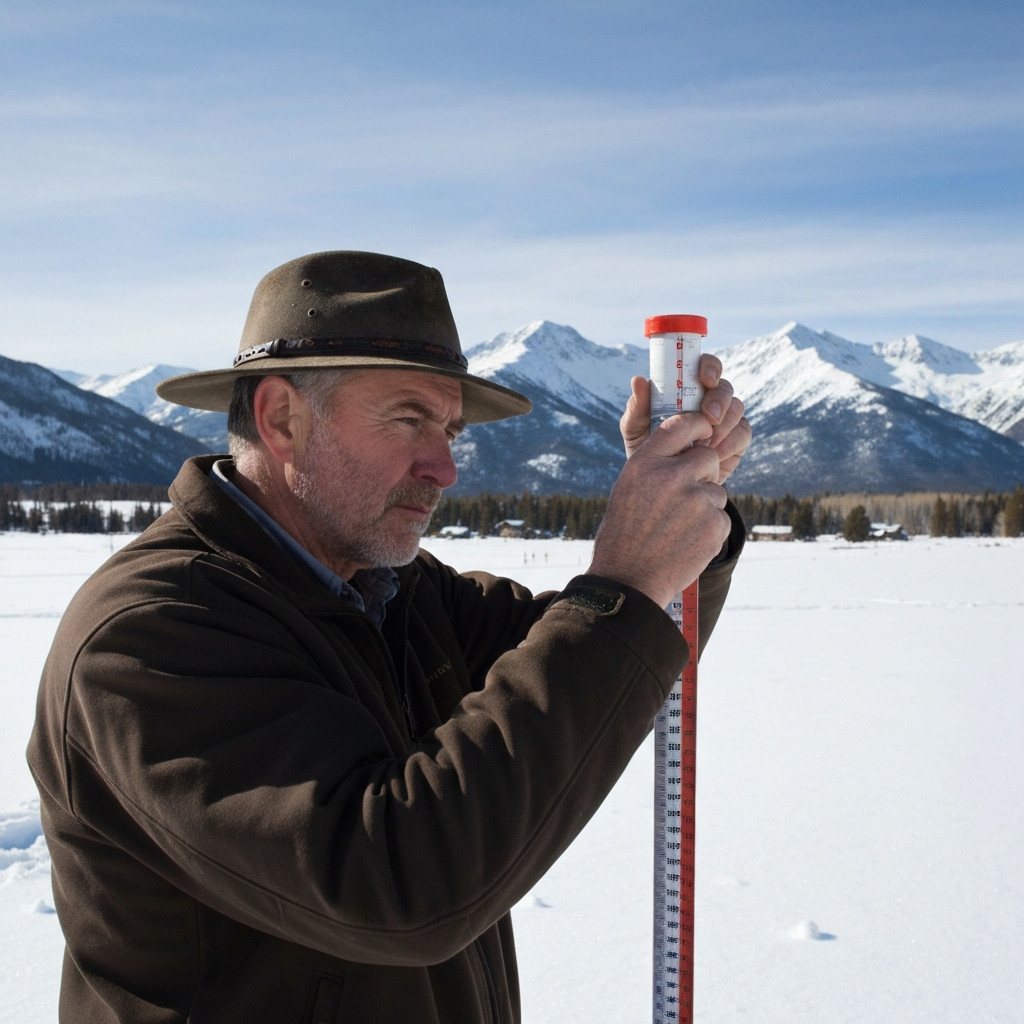
Recent assessments have revealed that Colorado’s snowpack has reached its lowest levels since statewide record-keeping began in 1941. This development is particularly concerning for communities like Kremmling, situated near the headwaters of the Colorado River.
Hydrologist Maureen Gutsch, from the U.S. Department of Agriculture’s Natural Resources Conservation Service, noted the severity of the situation during a recent survey in Kremmling. She observed that mountain snow accumulations peaked a month earlier than usual and contained just half the average moisture content. This premature melting and reduced moisture are alarming indicators for the region’s water supply.
The implications of this diminished snowpack are far-reaching. As snowmelt is a primary source of water for the Colorado River, reduced levels can exacerbate existing drought conditions across the western United States. Cities and agricultural areas dependent on this water source may face increased challenges in the coming months.
Local authorities and water management organizations are closely monitoring the situation. Residents are encouraged to stay informed and consider water conservation measures to help mitigate potential shortages.